chimney fires in England
Recorded in 2025 to 2026. Each incident was serious enough for a fire and rescue service to attend.
 Book a sweep
Soot and creosote can catch fire inside the flue. Nests and debris can block the route out, forcing smoke and carbon monoxide back into your home.
Chimney fires can smoulder without being noticed. Heat can damage the chimney and ignite nearby materials in the roof. Regular professional sweeping is essential fire prevention, not just cleaning.
Book a sweepRecorded in 2025 to 2026. Each incident was serious enough for a fire and rescue service to attend.
The busiest three months match the period when fires and stoves are used most.
Kent Fire and Rescue Service warns that a chimney fire may go undetected while heat builds inside the structure.
A blocked flue or poor ventilation can allow carbon monoxide to enter the property.
Wet wood produces more smoke and tar deposits, less useful heat and a greater risk of chimney fire. Good fuel and regular sweeping work together.
Choose properly seasoned or kiln-dried logs. Use a wood moisture meter on a freshly split inner face, following the meter’s instructions. Check several logs: a dry-looking outside or a “kiln-dried” label alone cannot tell you how damp the wood is now.
Follow your appliance manufacturer’s fuel guidance. Never burn painted, stained or chemically treated timber, MDF, old furniture or household rubbish. Avoid unknown scrap wood and pallets. Look for Ready to Burn certified firewood and keep it sheltered with good airflow.
Use the air controls as your appliance manual directs. Starving a fire of air and prolonged low-temperature burning can encourage deposits and damage the liner. Even dry wood does not remove the need for regular sweeping.
Compare a clean flue with different types of deposits. Tap the illustration to view the labels at full size.
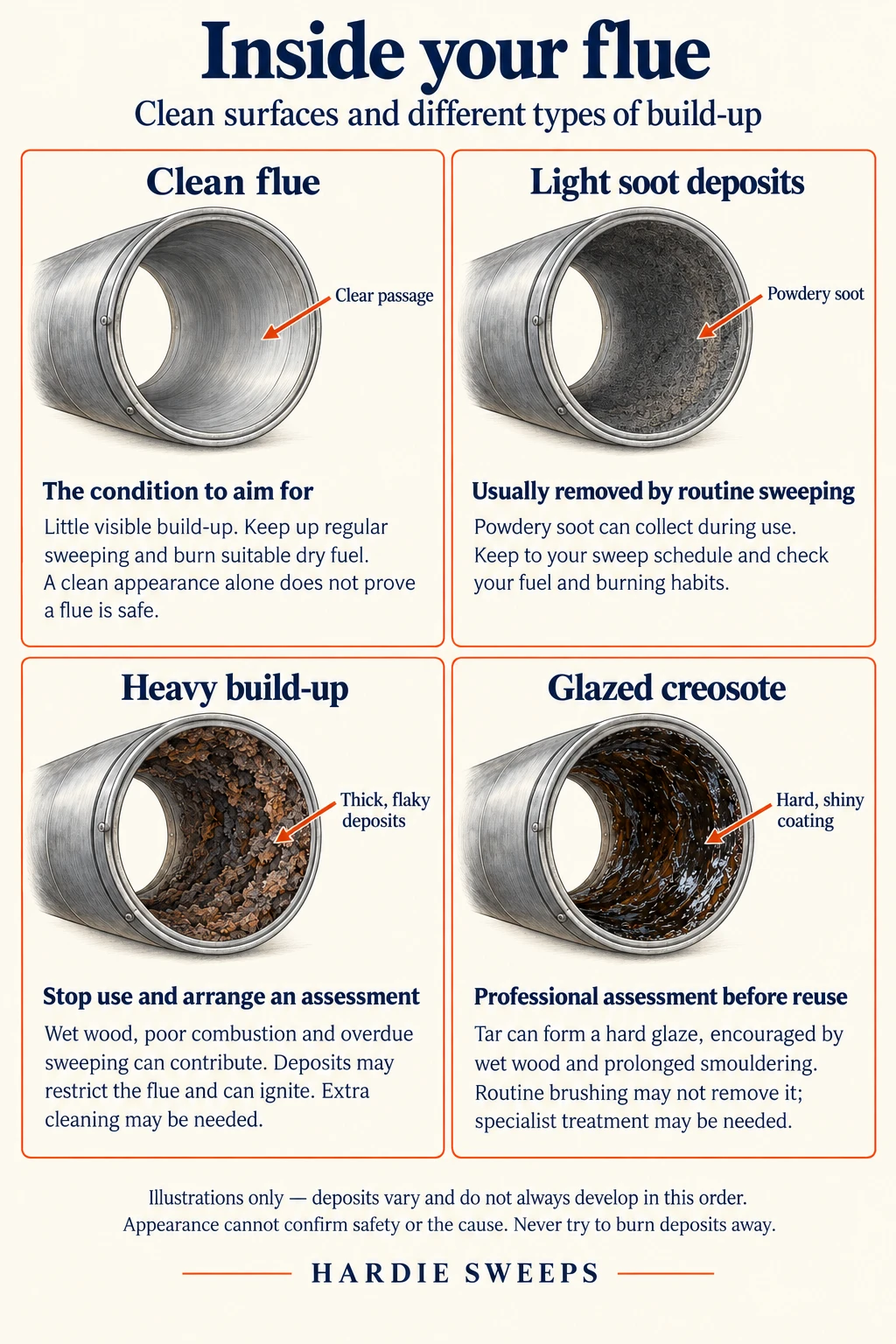
Creosote is a combustible deposit that can accumulate inside a flue. Wet wood and incomplete burning encourage it. It may form sticky tar or hard, shiny deposits; the cause and severity need a professional assessment.
If these deposits ignite, a chimney fire can damage the flue and spread to nearby parts of the building. A heavily tarred flue needs assessment before further use; ordinary sweeping may not be enough.
Act on warning signs. A tar smell, poor draw, falling deposits or smoke entering the room are reasons to stop using the appliance and arrange a professional check. Do not try to burn deposits away with a hotter fire.
Damage can mean more than a sweep. If inspection finds the liner is unsafe, replacement of the full liner may be necessary. Access, scaffolding, liner length and installation work affect the cost. Build-up alone does not automatically mean replacement: get an assessment and a written quote.
Suspect a chimney fire? Get everyone out, stay out and call 999. Do not use the appliance again until the chimney and appliance have been professionally checked and any necessary repairs completed.
Arrange a chimney checkHow often depends on the fuel, how much the appliance is used, its condition and the manufacturer’s instructions.
Heavy use may need more frequent sweeping. Kent Fire and Rescue advises quarterly sweeping while a wood fire is in use.
Book before the heating season and again after the busiest period of use.
Arrange a sweep before the heating season or after a long period without use.
Policies differ, but homeowners are normally expected to keep their property in good condition. If chimney maintenance is relevant to a fire, an insurer may ask when it was last swept and what work was completed.
Keep every sweep certificate and invoice. They provide a dated record of the work completed.
Read your own policy. Ask your insurer how often they expect the chimney to be swept and what evidence they need.
Do not assume a certificate guarantees cover. Your insurer decides every claim using the terms of your policy and the circumstances.
Request a bookingSafety figures and guidance on this page come from UK fire services, HETAS and official national statistics.